

“English; A language that lurks in dark alleys, beats up other languages, and rifles through their pockets for spare vocabulary.” (Bumper Sticker)
A humorous quote that is quite accurate, actually. Of 80,000 English words, roughly 28% originate from Latin, 28% from French, and 25% from Germanic languages (Pie Chart: Wikipedia). So, to honor those countries that have shared their vocabulary, by choice or by force, here is a list of ten words that native English speakers may not know as foreign. Granted, there are thousands of words to choose from, and to pick ten was difficult. After all, how many know that tycoon comes from the Japanese word “taikun” (great lord)? Or, that gung ho is Mandarin Chinese for “gongye hezhoushe” (work in harmony)?

Impress your friends with your new knowledge of the English language as you explain the interesting origin of words like robot (robota, Czech for “drudgery”), chic (originally schick, German for “elegance”), and kiosk (Turkish for “pavilion” or “palace”):
10. Poltergeist
As so vividly demonstrated in the numerous Poltergiest and Amityville Horror movies, a poltergeist is some sort of paranormal (and usually violent) activity taking place around those who are deeply troubled or have been traumatized. The word itself comes from the German words “poltern”, meaning to make noise, and “geist”, meaning ghost. Most of this activity has been attributed to various physical or electrical explanations by skeptics, but like with anything paranormal, there are cases that are too weird for explanation.
9. Placebo

You’ve probably heard of the placebo effect, especially in drug testing. A placebo is “an innocuous or inert medication; given as a pacifier or to the control group in experiments on the efficacy of a drug” (wordnetweb.princeton). The noun placebo comes from a Latin verb meaning “I shall please,” in reference to some participants’ belief that the “medication” had an effect. What is actually happening however is that the participant may be unwilling to say that they experienced nothing out of fear of failure or of disappointing the researcher.
8. Loot

Loot, swag, plunder. No matter what word you use, you know that you’re talking about treasure. The word loot itself is an Anglo-Indian word with a root in the Hindi word “lut.” As a Hindi word, loot is an item stolen during war or riot. The word came into the English language during the British occupation of India during the eighteenth century.
7. Kudos

An ancient Greek word that means “glory” or “reknown.” In ancient Greek culture, glory was found on the battlefield, much like every other civilization. When a soldier was refused his earned due, or kudos, it was considered a very serious insult. One of the most famous examples of kudos is in the Iliad when Agamemnon takes the maiden Briseis from the soldier Achilles as a gift of honor- kudos earned from his glory in battle.
6. Khaki

If there is one thing that the British Army was known for up until the nineteenth century, it was their bright red uniforms, earning them the nickname “redcoats.” This made them an easy target no matter where they went, and in combination with their emphasis on holding their formation, they were sitting ducks especially during the American Revolution. However, if one looks at the British Army now, they wear a different and more sensible color: khaki. The British began using the cloth and color found in their colonization of India, hence the name khaki, which means “dusty” or “earth” in Hindi.
5. Juggernaut

While most people think of the X-Men villain when they hear this word, it actually dates back to pre-colonial times. Juggernaut is actually Sanskrit for “lord of the universe,” and is a form of the Hindu deity Krishna. The word came into the English language when British visitors to India witnessed a parade famous to the Jagannath Temple, in which statues of deities that were forty-five feet tall on platforms with wheels seven feet in diameter are rolled through the streets. Ironic as Juggernaut himself is represented as a young boy often playing a flute.
4. Glitch

A word for “slip up,” glitch is believed to be a conglomeration of two words, both that meant to slip or slide, around 1962: “glitshen” (Yiddish) and “glitschen” (German). It was first used in English by American astronauts when there was a spike in an electrical current, and then broadened to other technical mishaps.
3. Confetti

Traditionally, confetti is an Italian word to mean “candy,” specifically sugared almonds and other sweet confections eaten during special religious occasions like weddings, baptisms, and first communions. The custom of throwing confetti however, does not come from Italy. In times of antiquity, small food items such as rice, dates, or nuts were thrown during times of celebration to represent fertility and abundance.
2. Berserk
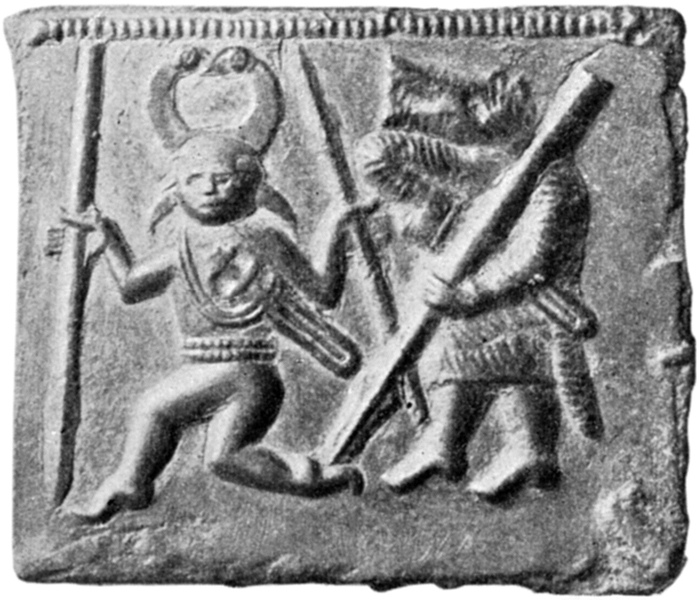
Berserk refers to an Old Norse word used to describe the Viking warriors. The word itself means “bear shirt” for the bearskins that the warriors used instead of armor. They believed that by wearing the skins and working themselves into their war frenzy, they would be endowed with the bear’s energy. Sir Walter Scott began using the word in the 1822 in his book The Pirate, more than one thousand years after the Viking invasions.
1. Assassin
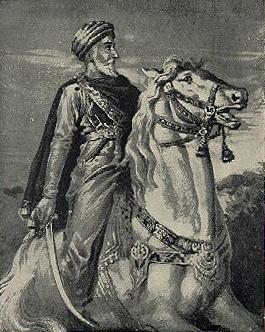
The origins of this Arabic word date back to the ninth century, when an Islamic sect was led to overthrow the Suni Muslims. Yemeni Shiite Hasan-I Sabbah was the founder of the group and set about his mission by targeting the enemies’ leaders. The group was given the name Hashshashin, meaning hashish-eaters, and was converted into English in 1603 as “assassin.”
40 Comments
Who thought any of these came from English? And why does every list have to tell me, that I believe this, stop insulting my intelligence, listing websites… I mean really, poltergeist?
No offense is meant, but many people don’t know the facts we present. And don’t you think the title would be a bit silly if we wrote, “10 Foreign Words Some People May Have Thought Were English” 😉
AMOK, GONG, ORANGUTAN, SARONG, BAMBOO, and MATA HARI from INDONESIA
it really helped me with my homework!! thank you xxx
Ghoul is an Arabic word, but many confuse it being an english word. Ghoul is a undead monster or demonic spirit from Arabian mythology, thought to rob graves and dine on corpses by either drinking the blood or eating the rotting flesh.
Read about the mysterious Copiale code that finally deciphered after 400 years, words are everything
http://www.educatinghumanity.com/2011/10/mysterious-copiale-code-deciphered-300.html
are these french?
art routine
collage joy
competition
force
publicity
police
machine
role
I think most english words were originally foreign words. By your classification almost all english words can be included in this list. For instance, sophisticated stems from greek origin.Sorry, I don’t really see the point of the article.
Kudos to you!
wow,never knew pistol wasn’t english! haha,suppose you learn something new everyday:’)
How about words PISTOL or ROBOT! Both came from Czech language and I believe, that they are more marghain than KUDOS or POLTERGEIST 😉 but no offense 😉
u need to know That hassan Ebn Sabbah ,Was not an Arab He was an iranian, and hashashin Right meaning is not even Closely Related To hashish eater,it was reffered to them as hashashin becuase they used To harvest medical Plants and Sell Them,it seems That u Really Dont know anything about The real Persian history(he was one the man Who tried to Rise Againts Arabs and free iRan From Their Rules.
If there is ANYONE out there that didn' t know that poltergeist was a foreign word just hearing it, it is more proof, like Anyone who uses 's for plurals, that WE NEED TO THIN THE HERD!
"Kimono is come from the Greek word himona, is mean winter. So, what do you wear in the wintertime to stay warm? A robe. You see: robe, kimono. There you go! "
What ?
Kimono is a Japanese word.
http://www.etymonline.com/index.php?term=kimono
The german "schick" originally comes from the french "chic".
Oh c´mon, you did ANYONE seriously think these words are English?
try these common words: cotton, agenda, lemon, lime, admiral, guitar, hazard, giraffe, coffee, magazine, mummy, orange, soda, sofa, spinach, sugar, syrup, tariff, zero, algebra, and many more. All Arabic in origin.
I would like to know what defines a word as "English". Is there a cutoff date for when the word must have entered common usage? Must it have originated within the boundaries of England? Must the word share a common origin with all other words described as "English"? Must it only be found in an "English" dictionary? Please help me out, I am writing a paper in linguistics.
There is no real "cutoff date" for words. For a word to be considered a part of the language it has to be known by most of the speakers of that particular language and be actively used in communication. However, this is not a clear definition and has many exceptions. Even experts are not clear on this point, there are as many opinions as there are authors. But, generally speaking, while saying a word is "English" we mean it has roots in English and is not a loan word from any other language. I am a student of interpretation myself and I have a diploma from linguistics, so I could start a longer discussion about this. I just provided some basics you may need for your paper. If you need more information, just ask.
Wow. English words from other languages. About a third of English was left by the Norman conquerors after 1066, who spoke French — all those -sion and -tion words, and words like beef and pork. All the names we call animals on the east coast — skunk, raccoon, moose, chipmunk — Algonquian languages. We think these words are English because they ARE English. Interesting list, but maybe we can do better on the truth continuum with headlines?
Dave, I admittedly had a difficult time titling this list. But I still felt it was accurate. I believe most of the public of the United States would be surprised to know these are foreign words. I could be wrong, but the real point of these lists is to get people thinking and provide a few minutes of entertainment.
And good onya (as we say Dahn Unda in Australia), TTM! *thumbs up* Anyone with any sort of formal English education would have been taught that a huge chunk of our language has its origins in other languages *roll eyes* … but a lot of these words are fun! 😀
Examples:
Algorithm – after a Persian scientist, Al-Khwarizmi
Boondocks – from Tagalog
Commando – Portuguese
Corgi – literally "dwarf dog" in Welsh
Emu (good Aussie icon!) – Portuguese
Kiwi (bird) and mako (shark) – Maori (our indigenous cousins in New Zealand) 😉
Mango – Portuguese (via Malay)
Navy (as in a fleet of ships) – Persian (via Latin)
Shalom – literally "peace" in Hebrew
Ukelele – Hawaiian, meaning leaping flea ('uku' flea + 'lele' to jump, leap)
Verandah – Malayalam (south-western India)
Yo-yo – from Tagalog
and a real 'doozy' (origin unknown – http://oxforddictionaries.com/view/entry/m_en_gb0…
Beige – according to the Oxford English Dictionary (the only one worth consulting on ENGLISH, imho) (http://oxforddictionaries.com/view/entry/m_en_gb0070270#m_en_gb0070270), has its origin in "mid 19th century (denoting a usually undyed and unbleached woollen fabric of this colour): from French, of unknown ultimate origin".
OR
if you prefer the Wikipedia version: "Etymology: French beige via Old French bege, perhaps from Italian bambagia cotton, from Medieval Latin bambac-, bambax, from Middle Greek βαμβάκ bambak-, βάμβαξ bambax, probably from a Turkish word represented now by Turkish pamuk cotton, probably of Persian origin; akin to Persian پاÙ?با pamba cotton. cloth (as dress goods) made of natural undyed wool. a variable color averaging light grayish yellowish brown. a pale to grayish yellow.[53] "beige" /bazh/ may derive from "camBYSES" (Gk. βίÏ?Ï?οÏ? "byssos" fine cloth, "bysses.byses" fine threads. Persian princes' robe)<Persian "kamBUJIYA"<Babylonian "kamBUZI" title of kings of Babylon who wore the robe each New Year."
And let's not forget 'doofus' (North American, informal – http://oxforddictionaries.com/view/entry/m_en_gb0… which might be pertinent to some posters here! *whistle*
From a self-confessed 'dingbat'!! (http://oxforddictionaries.com/view/entry/m_en_gb0226790#m_en_gb0226790)
*Winks, grins and waves goodbye*
My favorite so far is 'ukelele' – love it!
As for the title, I was struggling to come up with a better one, too, but haven't been able to so far. Top 10 English Words With Interesting Origins? Kind of boring… Top 10 Words? Too broad. It's a tough one.
I agree entirely, Tanya, and have no problem with the title; in fact, I think it's great! 😀 My 'doofus' comment was aimed at a couple of others, particularly Dave in Northridge for his unnecessary and mean sarcasm. I guess he wasn't brought up with the principle "if you've got nothing nice to say, then say nothing"! Hmm, I think I'll shut up now!! 😉
It is misleading and disingenuous to call words “foreign” after they have long been internalized in a language. The correct term is “loan word” in the very common situation across the planet when words are absorbed from one language into another. Most (or all) words exist in many languages simultaneously. A better title would have been something like:
Top Ten Words That You Thought Originated From English But Didn’t
Galore, smithereens, glen, etc… all from the Irish language.
http://en.wikipedia.org/wiki/List_of_English_word…
Wrong! It comes from the CELTIC or GAELIC language which makes up of: Scottish, Welsh and Irish!
Also: Person came from the Latin word “Per” meaning “One”
Tsunami is japanese word for “Giant Wave”
History is the surname of a Latin researcher
-Don’t get me started on counting numbers….
“”History is the surname of a Latin researcher”
Really? How amazing, when you consider “y” doesn’t exist in latin alphabet!
History cames from latin “historia” that, in turns, is coming from greek ???????, (historìa).
The latin word is accented on the “o”, greek on the “i”
Modern spanish has ‘historia’ (pronounced exactly as the original latin), italian has ‘storia’ and french has ‘histoire’ .
And, yes, my own language is one of the latin drived languages I have just cited, so I am actually a showing off…
My bad, I presumed the letter “Y” not to be existing in latin alphabet as it was called “greek I” (old italians still sometime calls it “I greca”), this led me to think that it had to be considered a non original latin letter, as were the “J” “U” “W” “Z”
I was wrong, “Y” is a latin alphabet’s letter in its full right, the latin alphabet being derived from the greek alphabet, originally derived from phoenician alphabet.
This is the right punishment for being a showing off ….
I would like to point out that French, being a Romance language, derives from Latin. So it's kind of like 56% of the 80,000 words are Latin.
@ TopTenzMaster:
NO! No! No . . . . well, yes. LOL
I love the fact that every word in every language is a potential English word.
Honcho, as in " Who's the head honcho around here?", is also of Japanese origin.
A lot of English words are derived from other languages
"shampoo" and "cheetah" are words derived from Hindi also.
I always thought Shampoo came from San Diego from a man called Jonhy Elston who cleaned after the 1st ever whale show
"hun what did u did at work"
"one word: Shampoo"
You'd have to be pretty ignorant not to realize "poltergeist" and "confetti" are not originally English words.
It's interesting to learn the definitions of the original foreign words compared to how we use the word in English. It's also a good topic because I don't think many of us naturally question where our words come from – once you start thinking about it, you realize how often you use words borrowed from other languages.
I like 'schmooze' (from the German word schmusen, which pretty much means 'cuddling') – adds a new slant on the meaning once you know that, doesn't it?
Are you really saying the world isn't full of ignorant people? 😉
I'll also add pajamas derived from the Persian word "paijama", meaning "leg garmet".
"skosh" comes from Japanese, too!