

Among the most popular supernatural beings, witches rank right up there with vampires and werewolves. Witches appear in everything from The Wizard of Oz to Harry Potter to True Blood. The sheer number of books, television shows, and films that feature witches in main roles would be difficult to list. Yet, while there are many popular fictional witches, there have been numerous historical examples of real people alleged to be witches, just as various historical people have been alleged for various reasons to be werewolves or vampires. This list covers the ten most notable examples of historical people either officially charged for witchcraft in various legal courts and/or depicted as witches in various works of popular culture. This list also focuses only on alleged witches (women) and not alleged warlocks or wizards (men).
10. Christine Therese O’Donnell (born 27 August 1969)
The pretty and single Christine O’Donnell, a friend of left-wing comedian Bill Maher, became a notable American Tea Party Politician and Republican Party Candidate for U.S. Senator in 2006, 2008, and 2010. She lost in all three elections. During the most recent election, O’Donnell received much airtime over a statement she made back in 1999 on Maher’s television show. She claimed to have “dabbled in witchcraft”. As a result, the author and founder of ChristinePac became most known for this comment during the election to such an extent that she ended up releasing a political advertisement in which she claimed she was “not a witch,” but rather “you”.
The advertisement was also mocked and even O’Donnell acknowledged it backfired. What makes this case particularly fascinating is that in the twenty-first century, still someone can be burned at the stake of public opinion for allegedly having had even an interest in witchcraft (quite the insult to the various peaceful Wiccans out there). Never mind that O’Donnell is not even a “witch” anyway, but a practicing Catholic.
9. Catherine Monvoisin (c. 1640 – 22 February 1680)
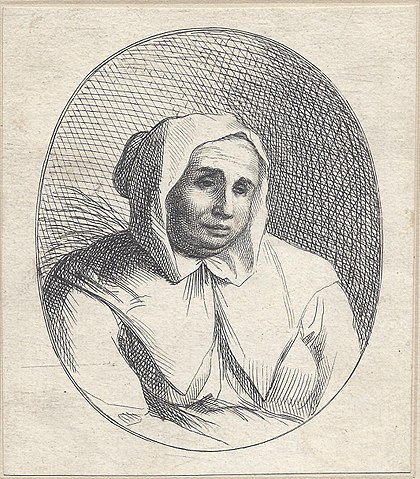
One of the most infamous incidents during Louis XIV’s seventy-two year reign (the longest in French history) involved fortune teller Catherine Monvoisin. The Affair of the Poisons followed the extreme torture and execution of murderess Madame de Brinvilliers (22 July 1630 – 17 July 1676); she had to drink sixteen pints of water before being beheaded and then burned at the stake for good measure. Brinvilliers’s trial drew attention to other mysterious murders. Monvoisin was among the most famous individuals brought under suspicions of such mysterious unsolved murders.
She was accused of not just of providing poison to various murderers, but also of being a sorceress and as such was convicted of witchcraft and burned to death in public. She was only one of thirty-six people executed during the Affair of the Poisons. Some have speculated the so-called Man in the Iron Mask was also involved in the Affair of the Poisons (hence his punishment), although these beliefs have been doubted due to new evidence suggesting otherwise.
8. Walpurga Hausmännin (died 1587)
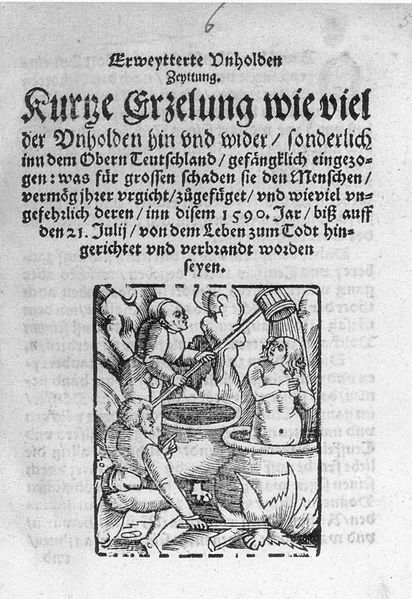
France was hardly the only European country in the early modern era to experience serial killers condemned not just for their role in murders but also on inflated charges of witchcraft. Widowed Austrian midwife Walpurga Hausmännin probably was a child murder, but after being tortured for her confession, she was officially executed for witchcraft and even vampirism. According to her confession she had sexual relations with a demon and agreed on a written contract to serve Satan in exchange for being saved from poverty. The demon gave her a special ointment that she could use to inflict suffering upon her victims. She continued to have sexual intercourse with the demon visitor and murdered forty children via the demon’s salve, or by crushing their foreheads, or even sucking out their blood in some kind vampire-esque manner. The allegations against her included acts of cannibalism done with other witches.
What makes her worthy of this list is just how extreme the authorities were in punishing this alleged child killer. First, they confiscated her property. Next, they took her through the city and mutilated her before they reached the place of execution. Along the way, they tore her left breast and right arm with irons followed by her right breast and then her left arm. Next, they tore the left hand When they reached the place of execution, they cut off her right hand and only after that did they burn her alive at the stake. Finally, they dumped her ashes into a stream.
7. The Last Executed European Witch?
Considering that the European witch hunts went on for so many years, the last person to be executed as a witch in Europe would have to be significant for finally ending such a long practiced disturbing epoch in human history. Yet, scholars do not agree on who exactly was the last executed alleged European witch. Here are several of the possible candidates.
First we have Anna Göldi (24 October 1734 – 13 June 1782), known as the “last witch” in Switzerland, who was executed by decapitation for murder. After being tortured, she confessed that the Devil appeared to her as black dog and the two then entered into a pact; however, she was not technically sentenced for witchcraft. Moreover, on 27 August 2008 the Swiss parliament officially exonerated her.
Next, we have an alleged Polish arsonist and witch named Barbara Zdunk (1769 – 21 August 1811) who lived in Prussia. In 1806, Zdunk was blamed and arrested for a fire that ravaged and nearly destroyed the entire city of Rößel. Despite actual evidence, she was not only sentenced for the alleged arson but was also executed by burning at stake on a hill outside Rößel in 1811. Although her conviction was upheld by several appeal courts, some speculated that Polish soldiers were actually behind the fire. As with Anna Göldi, some historians dispute whether or not Barbara Zdunk’s trial should be counted as an actual witch trial in a legal sense, because witchcraft was no longer a criminal offence in Prussia at the time of her sentencing.
Sticking with alleged Polish witches, we next have the widow Krystyna Ceynowa (d. 1836) who also lived in what was then Prussia. Her community held suspicions that she too was a witch, but again, Prussian authorities were no longer interested in having formal witch trials. So, a lynch mob captured her and held an illegal trial in which they tossed her off a boat into the Baltic Sea. The idea being to test if whether she sank or floated to determine if she was a witch. Because she managed to stay a float for longer than the mob would have expected (probably due to her gown and skirt acting as a buoy), they declared her a witch and then killed her with the paddles they had on their boat. Because her death came about from an illegal trial and was more a lynching does it count? I guess it depends on what you want to believe.
As for one of the last confirmed trials for actual witchcraft, we have 63-year-old peasant Anna Schnidenwind (1688 – 24 April 1751) in Germany. She too was blamed for a fire, after of course making a pact with the Devil, that destroyed most of a village, in this case the village of Wyhlen. She was strangled and the burned. As for which of the four you believe deserves the distinction of last executed witch in European history, please indicate as much in the comments.
6. Agnes Waterhouse (c.1503 – 27 July 1566)

Mother Agnes Waterhouse is known not for being the last woman executed for witchcraft, but rather for being the first woman executed for witchcraft in England. She alleged had a Satanic cat that technically belong to another accused witch named Elizabeth Francis. Purportedly Waterhouse’s own daughter testified against her mother who was alleged to used sorcery to kill everything from livestock to her own husband. Along the previous few alleged witches on this list, she was hung rather than burned or strangled.
5. Joan of Arc (ca. 1412 – 30 May 1431)
Saint Joan of Arc is undoubtedly the most famous woman on the list and rightfully so. Her victory in the Hundred Years’ War had incredible consequences for human history, because it meant a turning of the tide in the war and therefore the inevitable failure of England to rule France. Imagine if somehow the two kingdoms had merged, given all that England and France did afterwards. In any case, Joan claimed to hear the voices of saints and persuaded the French king to give her an army to relieve a siege taking place at a major strategic location in France. She succeeded and set in motion the decisive events that eventually lead to the official coronation of Charles VII as king of France and the gradual eviction of England from France.
Nevertheless, her personal military successes did not last and she was captured by Burgundians and put on trial. To her supporters she was seen as divine help, but her opponents saw her as a witch and she was tried for heresy. She was condemned and executed by burning at the stake. Her career has been one of the most celebrated in Western history ever since and as such has appeared numerous time in films, plays, operas, advertising, paintings, video games, well, pretty much any form of media in existence.
4. The Bell Witch

The Bell Witch, also suspected to be a poltergeist rather than a witch, apparently harassed the family of a farmer named John Bell Sr. in Adams, Tennessee in 1817. The attacks included strange noises and phantom face slapping, among other suspicious unexplained happenings. In Martin Van Buren Ingram’s An Authenticated History of the Bell Witch (1894), the author claims that a poltergeist named Kate cursed the Bell family, while others claim the Bell Witch was a slave Bell had killed, someone Bell cheated, or even some kind of bizarre dog-rabbit hybrid. Future president Andrew Jackson, one of America’s bravest and most badass presidents (he dueled, for example) allegedly found the story interesting, but was scared away somehow when trying to investigate its validity. Obviously, so many different takes on what happens leave us a bit suspicious of what really happened.
Making matters worse is that earliest known account of the so-called witch was published in 1866, quite some time after 1817. As such, the whole story, let alone the supernatural aspects, are likely legends. Nevertheless, it has found its place in popular culture. One notable retelling of the story is An American Haunting (2005). This film, which grossed nearly $30 million, suggests that the alleged hauntings were really imagined by Betsy Bell who was being sexually abused by her father.
3. Anne de Chantraine (1605 – 17 October 1622)
Seventeen year old Anne de Chantraine was burned in either Waret-la-Chaussée (now central Belgium), Liège, or in France. Her case in itself is not really that unusual compared to some of the others on this list, but it has attracted interest in both the Francophone and Anglophone worlds. Full length books in French have covered her life and she is one of the main playable characters in a whole series of interactive video board games called Nightmare or Atmosfear,depending on the country of release. She is the titular character in the main game of the series and on the video, which can be viewed in multiple languages on Youtube, she progressively goes from being a beautiful albeit haunting, ghost-like young lady to a monstrous green, squealing stereotypical hag type of witch.
2. The Salem Witches

The Salem Witch Trials are by far the most notorious in American history and have been the subject of numerous documentaries, plays, and films. To Americans living during the Red Scare, the Salem Witch Trials seemed like a good parallel to the paranoia over suspected communists living amongst us. According to the stories, a group of young girls started the pandemonium that resulted in several hangings and the pressing to death of one man. Three people in particular from the trial have achieved the most notoriety and as such of the three females whose names are most typically mentioned with regards to these witch hunts. The first name of note belongs to Tituba, a slave who belonged to Reverend Samuel Parris. In 1692, Betty Parris (28 November 1682 – 21 March 1760), the Reverend’s daughter, and her friend Abigail Williams (12 July 1680 – 1699) accused Tituba of witchcraft. Under coercion, the slave became the first person to confess to witchcraft in Salem Village, claiming that she had spoken with the Devil, rode around on sticks, and that one woman had some kind of strange half bird/half woman creature in her possession.
Betty, Abigail, and Tituba subsequently accused others of witchcraft with their allegations striking us as downright absurd, but were apparently considered credible back then. Miraculously for her, Tituba was not actually executed, but her fate after the trials remains a mystery. She has also been the subject of extensive scholarly debate over her ethnicity. As for Williams, she has become perhaps the most recognized accuser to star in various forms of popular media. She has been portrayed by such mainstream actresses as Winona Ryder (29 October 1971) in The Crucible (1996). In that film, Williams is a bit older than her historical counterpart, but serves as the main female lead. Williams is also one of the key antagonists in The Sorcerer’s Apprentice (2010). Finally, Bridget Bishop (ca. 1632, England – 10 June 1692) is a name people interested in the Salem Witch Trials should be familiar with, because she was the first person of either gender to perish by execution as a consequence of the trials. The allegations against her include attacks on children and even appearing as a specter so as to assault sleeping men. All in the episode was one of the most shameful in American history and came to an end after scores of people were accused and again, after several executions. The incident shows that the era of the witch hunts was not just limited to Europe.
1. Iphigenia, Hecate, and Trivia
Of all the “people” alleged to be witches, to earn first place on our list, she must go back far into mythological history, in this case Greek mythological history. Iphigenia was the daughter of Mycenaean king Agamemnon and his queen Clytemnestra. According to the myths, Agamemnon was punished by the goddess Artemis for killing a deer in a sacred grove. Artemis would not let the king sail for Troy to fight the semi-legendary Trojan War unless the king perform a sacrifice to atone for his actions. To satisfy the goddess, Agamemnon seems to have no choice but to sacrifice his own daughter. According to Hesiod’s Catalogue of Women, Artemis transformed the innocent girl into the goddess Hecate, who is known as the goddess of witches.
So, the possible real person Iphigenia thus did not just become known as any old witch, but the goddess of witches! She is still worshipped by various practitioners of Wicca and was worshipped by Romans as the goddess Trivia. She is considered not just goddess of witches, but also of crossroads. Nevertheless, the story that she was a mortal turned goddess is only version of her mythological origins. Other myths claim she was a more ancient goddess than only coming about during the Trojan War and still other myths claim that she was also the same goddess as Isis from Egypt. Hecate/Trivia is usually depicted in three forms (maiden, mother, and crone) and is generally accompanied by dogs. For being a goddess of witches in Greek and Roman religions as well as modern neo-Paganism, Iphigenia/Hecate/Trivia/Isis, or whatever you choose to caller her, must receive the number one spot on are list of people believed to be witches at some point in history. No one else has been believed a witch by so many for so long.
58 Comments
I guess I didn’t realize how many people were actually accused of being witches in both Europe and the United States with the Salem Witch Trials. You’re only taught in grammar school and high school that the Salem Witch Trials are the only relevant instance of this.
I had no idea that the daughter of Agamemnon was connected to the goddess Hecate. No matter how many Greek myths you read, there are always more to read.
It is shocking to me that before I took this class that Joan of Arc was burned for being a witch. I’ve heard of her before but just as a saint and war hero. I feel a little cheated from my history classes that left that out. I also found the Christine O’Donnell on this list as quite humorous.
I’ve mentioned in a previous comment that I love these sort of “top 10’s”
I also can’t believe Joan of Arc (no. 5) was considered a which
It is hard to accurately determine if these people were, in fact, “witches”. Most likely, common folk of the time merely adapted the idea of the witch in order to explain that which they did not yet understand. At the time, it was a lot easier to write someone off as evil or unholy than it was to take up an empirical, objective investigation. We know today that some of the behavior of these witches can be explained by science; during these ages of ignorance, “magic” and “witches” were just things which science did not yet understand.
I never knew that Joan of Arc was put to death for being a witch. Too bad her apparent contact with divinity led to her death.
I also did not know this! Very interesting!
The topic of witches has always interested me. Obviously I’ve heard of Joan of Arc being accused of being a witch and the Salem Witch Trials but I had no idea that modern people were actually being accused as well like Christine Therese O’Donnell.
It is so odd to me that anyone would accuse someone else of being a witch especially in more modern times. I am fascinated with the Salem Witch Trials however.
I think it is tremendously sad that most of these women simply became scapegoats for people who were experiencing some kind of fear from the world around them. Fear can do scary things, but the tortures they had to experience when they were often innocent of any crime, are hard to imagine.
I have always been fascinated with the Salem Witch Trials, sad they aren’t #1
Never really knew Joan of Arc was thought to be one
The Witch Trials in Salem were always interesting to learn about, as well as the different perspectives that were given about them.
Definitely most interesting is the Salem Witch Trials.
I’ve always thought the most interesting and thought provoking witch trial was that of Joan of Arc.
You left out Hillary Clinton.
Very Interesting article. I mainly enjoyed th excerpt on Joan of Arc. I never knew that she was essentially summoned to the trials herself.
Speaking of sexist attitudes 🙂 I believe the real reason Joan of Arc was executed was not they believed her to be a witch, but more so because the powers that were in the 14th century were not ready for womens’ liberations. Here was a woman wearing mens’ clothes and fighting in a war. Not only that, she led the French army to victory. Oh God forbid (pardon the pun), we couldn’t have that could we? They couldn’t have a woman doing a man’s job 🙂 and not only that being highly successful at it:) At a time when the church and the political leaders were infamously corrupt (hasn’t changed much either in some instances), it was very convenient to trump up charges so as to ‘get rid of people’ and witchcraft and heresy was the flavor of the month.
Let’s not be sexist here, surely there was the occasional warlock burned too?
I found most interesting part about Joan of Arc.
I knew about her as a saint and a warrior but what I had no
Idea that she was also connected and at the end killed because
of suspicion that she is a witch.
Walpurga Hausmännin is the one that interested me. It was messed up how the people just took her apart like that. Like what was the point? Were they doing this for there pleasure?
I find it very interesting that a lot of the different cultures and area’s around Europe had different definitions of witches and what they thought they were capable of. Also how interesting that some of these “witches” were exonerated century’s after they were already dead.
Anna Goldi from Switzerland is the one I found most interesting..
The Salem witch trials were most interesting to me because it is part of American history. I remember visiting the village when I was young and found it to be quite exciting but spooky. Like others have already had mentioned, the fact that the whole origin of this matter is not 100% fact adds to my interest. As a young woman it also crosses my mind of how fearful I would of been to live at this time. So many woman were being wrongfully harassed and eventually killed. It is also ironic to me that such a religious Community as the Puritans who had been harmed in England then came to America and did harm to others under horrible unjust circumstances. The video mentioned that some of the testimonies were so ridiculous that all a person had to say is that a woman harmed them in their dreams.
I thought the the witch that owned her own shop that sold all of the spices and spell-casting materials was the most interesting because she told us how the witches were not really the satan-worshipping people they were portrayed to be for so long. I felt like i learned more on the topic with her speaking.
I enjoyed the salem witch trials was interesting. I dont think I ever payed close attention to the story. I first thought it was all a joke but then I became to really enjoy the information of what really happened to the girls!
Like Hannah, I think the Salem witch trials are the most interesting. No one really knows why they happened. Some think it was a game, some think it was a prank, and others think it happened because of a drug possibly in the wheat that summer because of the weather conditions. None-the-less, things got way out of control and many innocent people ended up dying. I also find it interesting that after the trials were over, a few years later many people confessed to false testimony during the trials. I think it’d be interesting to know what happened to the girls after the trials.
I’ve been trying to find out if they ever hanged Samantha. Does anyone know? Was it televised?
My favorite witches out of the list were the salem witches because they were very popular and the trails were as well. Also, I found it interesting in class how you discussed the amount of people tortured, jailed, or killed just under suspicion. Especially due to the wheat and damp season creating muscle spasms and etc, the same effects they believed a witch would do. Since this was why so many people were accused, it shows the absurdity of the time. These little girls who took after their maid most likely were using it as a game, and were not actually witches. This is why I find it most interesting among the witches listed.
H.B.
By far I think Joan of Arc was the most interesting. First of all she was a women solider and leader. She had a large victory in the 100 years war which lead to England not being able to rule France. She claimed she could her the voices of saints who persuaded the French king to give her an army to relieve a siege at a major strategic location. She succeeded and that set in motion the official coronation of Charles VII as King of France. Later in her life though she was captured by Burgundians and burned at the stake for being a “witch.” Joan of Arc was a great women figure and I find her fascinating.
I find the Salem Witch Trials the most fascinating. In 2005 I went to Salem for Halloween. I actually got to meet Ms. Cabot as well. Anyways, the fact that caught my attention that seems different to me was the fact that in Salem, once the village’s ruling body realized they could profit through the trials, they allowed it to keep going on. Most of the women that were hung, coincidentally, were typically single and owned property. Since the court system would charge the accused witches unbelievable amounts of money for their “unbiased” court hearing, the accused didn’t have the money to pay it, so the courts gladly accepted their properties as payment. Not until this caught the eyes of higher officials did this hysteria stop. Not only is it sad those 20 people paid their lives, but I also got to see the jail cells that held the accused, which were horrid. I have heard that 5 people died in jail, however, on one of our tours, they believed it to be more because so many had diseases when they were released that their deaths were accounted for the diseases and not while they were in jail. There was even a child that died in jail.
I think that the Salem Witch Trials are the most interesting. One of the things I find interesting about it is that it does show that witch hunts were not just happening in Europe. Also, it is so fascinating that just 3 people can bring about so many allegations of others being witches. It caused a lot of deaths and a lot of pain for many people.
I think that Joan of arc is the most interesting. I learned about her in my high school French class and really found he story to be interesting. She was the leader of an army that won several battles and then all of a sudden she was accused of being a witch and then burned.
I find Joan of Arc to be the most interesting–the accusation that she was a witch truly highlights the insanity that swallows the whole ordeal. Just because she won a battle, she is a witch? With no possibility of actual military skills? Finger-pointing characterized all of the witch accusations throughout history, and this scenario is no different: someone did not like her, so she suddenly became a witch and had to be burned at the stake.
This is a topic that always blew my mind. It just goes to show how dumb people can be. Im am not very religious so Wicca seems no different to me than anyone elses religeous beliefs(whatever gets you by.).When i read accounts as such i cant help but think whoes is more deserving of death?Those who practice a non traditional belief system. Or the psychopaths who can beat a person to death with a boat or or stand around a burning body.
On a side note, Your a day late and a dollar short parliament. Anna Goldi could have used that exoneration a bit sooner.
Clifford, you have shown yourself to be a great intellectual and speller but how do you beat somebody to death with a boat?
Witches be crazy. I didn’t realize how many people there are out there that participate in witchcraft. As a like a lot of the other readers, I also didn’t know that about Joan of arc. This was a very interesting article, I’ll have to keep my eye out!
Dear Angela,
I am happy you liked it!
Have a wonderful weekend!
Matthew
This was a really interesting article to read because the concept of witches has always fascinated me. We just recently covered the Salem Witch Trials in my American Christianity course, and I learned a lot more about the trials. It is crazy to think that witch hunting in Europe spread all the way to the colonies and culminated in a shameful part of American history. In particular, I was really shocked to learn about the Malleus Maleficarum. It is hard to believe that there was actually a guide to hunting witches that circulated throughout Europe and the colonies.
It isn’t really a part of American history per se; it happened before the USA existed. It was just the mentality of the times, before principles for individual freedom and limited government were developed (partly out of the struggle between Protestants and Catholics.) What principle should determine whether some act or group should be outlawed and discriminated against? Back then it just seemed to be whatever some king with his supposed divine right felt like, and even today we discriminate against people not on basis that they agress against others but because we deem the action indecent or whatever, such as homosexuals.
Very interesting article, I am amazed by the stupidity of humanity every time I read about people being accused of witches, the thought of all of those lives ruined and people murdered in such cruel ways is truly sad. While many may think religious fervor is to blame for such acts, the problem is much deeper, the problem is the problem of humanity in general… We tend to use scapegoats in order to solve our “problems” temporarily and never examine the true issue, us. For if it was not religion, there would have been another form of witch hunt, the Red Scare led by Joseph McCarthy was a form of a witch hunt very reminiscent of the Salem Witch Trials, except with no religion involved.
Is it just me or does that first witch look like Sarah Palin?
How about the Lancashire Pendle Hill witches. Surely, they deserve a mention here too.
This was a really interesting read
Dear Mr. Verney,
Thanks I am glad you enjoyed the list! For anyone unfamiliar with the alleged witches he suggested, please see http://en.wikipedia.org/wiki/Pendle_witches as they are indeed quite well-known among alleged English witches.
Sincerely,
Matthew
This article is very interesting to say the least. Its really almost mind blowing to believe that the accusations and beliefs of witchcraft can jump from Greek Mythology all the way to current day. Its humorous to see such a popular political voice as herself, Christine O’Donnell be mocked and condemned for such a minor statement. Why any person or politician at that extent, would come out and say something like that just really makes people wonder what is really going on in their free time. Luckily for O’Donnell, were not living in the 1400’s, so she didn’t have to worry about the mob with torches and pitchforks, but rather the voiced opinions of the US population, which as of today, i couldn’t really tell you whats worse.
This article made me realize how much we are surrounded by “witches” through history all the way up to current media. It’s also crazy how Agnes had a Satanic cat had somehow “existed” and her own daughter testified against her in order to save herself.
All interesting indeed but the one that truly startled me was Walpurga Hausmännin. Its so crazy how someone could talk to the devil and do all unusual crimes and ideas. No wonder her torture was unusual ha. As for my answer as to who was the last european witch, I’d say it was Anna Goldi since i feel her reason was more evidential and easier to say she was the witch out of all of them. I definitely didn’t think it was Ceynowa, just for the stupid fact of finding out if she was a witch by seeing if she would drown or stay afloat and then be killed.
Its Crazy how many people were executed, based soley off the testimony of young girls In Salem
The “witch” that caught my attention first was #5 Joan of Arc. I never knew the full story of why she was burned at the stake and convicted of heresy. For an iconic war hero, it all seems unfair and far fetched to have someone burned simply because they claimed to hear voices from saints, people considered to be holy and pure.
The Salem witch trials gets me so mad. I saw the movie the Crucible and it was women sabotaging each other by putting on really good acting skills. I feel like the puritans were so caught up in living pure lives, that they weren’t aware of the impure things they did. The whole series of events were just crazy to me.
Interesting article Dr. Z.! As for the Salem Witch Trials, there have been several ideas as to why this event escalated the way it did. One theory is that the neighbors took advantage of the situation to get even with their enemies. Do you think that this is plausible?
Source:
Davidson, James West., and Mark H. Lytle. “Chapter 2: The Visible and Invisible Worlds of Salem.” After the Fact: The Art of Historical Detection, Volume I. New York: McGraw-Hill. Print.
– Gene C.
Dear Gene,
Thanks and yes, that argument is certainly possible. Kudos for reading After the Fact! We read that in graduate school! 🙂
A TV show called Truth or Scare had an episode on witches that contained a nice and easy to follow summary of the Salem Witch Trials. You can also get an even briefer summary at http://www.history.com/videos/salem-witch-trials
Best,
Matthew
Very interesting to see that Joan of Arc was considered a witch by her enemies. I dont think that many people realize that.
I like how Youtube has the Anne de Chantraine videos in multiple languages. I find French the most appropriate given her name: http://www.youtube.com/watch?v=evrb76LtNpg
I’m pretty sure my friend’s ex-wife is one…
My ex-girlfriend, too,possibly… 😀
Little known trivia: Jyrki Virtanen, the co-founder of the Finnish Goth band “Two Witches” actually changed his last name to Witch. So, he’s OFFICIALLY Jyrki Witch now. http://en.wikipedia.org/wiki/Two_Witches
The Salem Witch Trials are always one of my favorite topics to read about. Great article.